
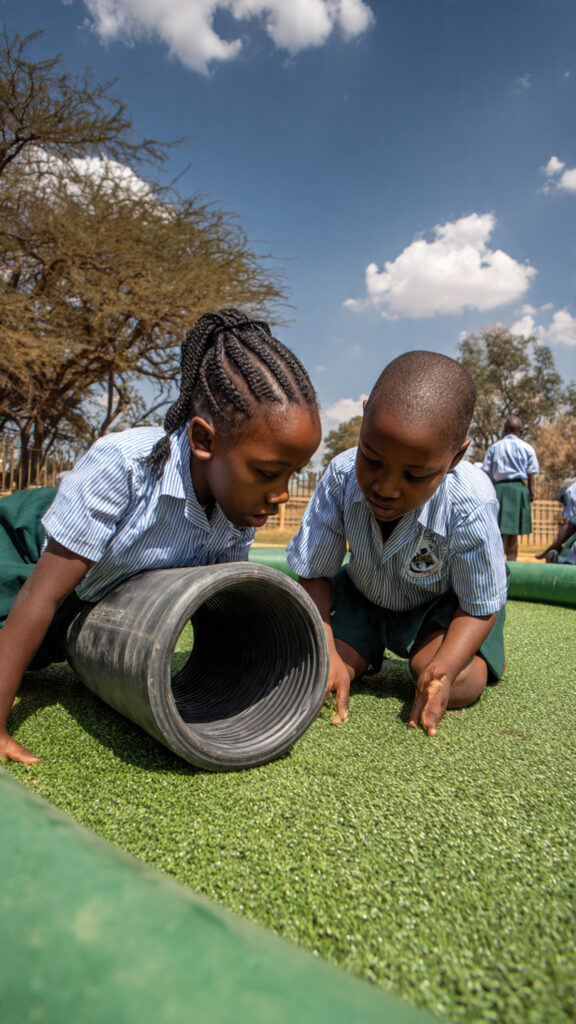
Transforming Bulawayo School Playgrounds with Safer Artificial Turf
School playgrounds across Bulawayo face a persistent challenge that disrupts learning and threatens children’s health. Consequently, dust clouds billow across bare patches of worn-out grass. Meanwhile, children return to classrooms covered in dirt. Furthermore, injuries from hard, uneven surfaces become commonplace. These problems drain school budgets while simultaneously creating maintenance nightmares for administrators.
However, a proven solution exists. Artificial turf transforms school playgrounds into safer, cleaner environments where children thrive. Indeed, schools throughout South Africa have already discovered how synthetic grass eliminates dust, reduces injuries, and slashes maintenance costs.
The Dust Crisis in Bulawayo’s School Playgrounds
Bulawayo’s climate creates unique challenges for natural grass playgrounds. Specifically, the dry season turns school grounds into dust bowls. As a result, children breathe in particulates during playtime. Subsequently, classrooms fill with dirt tracked in from outside.
Natural grass struggles to survive under the harsh conditions. Moreover, heavy foot traffic during break times wears down turf rapidly. Although schools attempt to maintain grass through constant watering, water restrictions and budget constraints make this unsustainable.
The consequences extend beyond mere inconvenience. Notably, dust exposure affects respiratory health, particularly for children with asthma or allergies. Additionally, teachers spend valuable time cleaning classrooms instead of preparing lessons. Meanwhile, parents worry about their children’s wellbeing during outdoor activities.
How Artificial Turf Eliminates Dust Problems
Quality artificial grass provides an immediate solution to dust-related issues. Importantly, the synthetic surface stays intact regardless of weather conditions or usage intensity. Therefore, no bare patches develop. Consequently, no dust clouds emerge during windy days.
Modern playground turf features advanced drainage systems that channel water efficiently. Furthermore, rain no longer creates muddy conditions that worsen dust problems when surfaces dry. As a result, schools maintain clean, usable play areas throughout the year.
Children return to classrooms cleaner. In addition, custodial staff reduce cleaning time significantly. Moreover, air quality improves across school grounds. Ultimately, the transformation happens immediately after installation, providing relief from years of dust management struggles.
Injury Reduction Through Safer Surfaces
Playground injuries represent a serious concern for schools worldwide. Unfortunately, hard, uneven natural grass surfaces increase fall risks. Consequently, children playing on worn patches face greater chances of serious harm during normal play activities.
Traditional school grounds develop dangerous characteristics over time. For instance, holes form in high-traffic areas. Additionally, rocks emerge from eroded soil. Furthermore, surface hardness increases as grass dies. Therefore, these conditions create liability concerns for school administrators.
Research confirms that appropriate playground surfaces reduce injury severity. In fact, studies show that cushioned surfaces absorb impact effectively, protecting children during falls from playground equipment.
The Safety Advantages of Artificial Playground Turf
Premium 35mm artificial grass offers superior shock absorption compared to natural grass. Specifically, the synthetic blades provide consistent cushioning across the entire surface. As a result, no hard spots develop. Similarly, no uneven areas create tripping hazards.
Professional installations include shock-absorbent underlayment that enhances safety further. In particular, this padding system helps protect children during falls from playground equipment. Consequently, safety standards become easier to meet and maintain.
The surface remains level and consistent throughout its lifespan. Unlike natural grass that develops dangerous irregularities, artificial turf maintains uniform characteristics. Therefore, children play on predictable, stable surfaces that reduce accident risks substantially.
Schools report fewer playground injuries after switching to artificial turf. As a result, parents gain peace of mind knowing their children play on safer surfaces. Furthermore, administrators reduce liability concerns while creating better play environments.
Solving the Maintenance Challenge
Natural grass maintenance consumes enormous resources in school budgets. Specifically, weekly mowing requires equipment and labor. Additionally, irrigation systems demand water and electricity. Moreover, fertilizers and chemicals add ongoing expenses. Ultimately, staff time diverted to grounds maintenance reduces focus on educational priorities.
Bulawayo schools face additional maintenance complications. For example, water scarcity makes irrigation difficult and expensive. Similarly, harsh sunlight damages grass quickly. Furthermore, heavy use during breaks prevents proper recovery. Therefore, the maintenance cycle becomes endless and costly.
Many schools simply cannot keep pace with natural grass demands. Consequently, playgrounds deteriorate steadily. In fact, administrators face impossible choices between educational programs and grounds maintenance. Ultimately, the financial strain affects overall school quality.
The Maintenance-Free Advantage of Synthetic Turf
Artificial grass eliminates the maintenance burden almost entirely. Specifically, no mowing is required. Additionally, no watering schedules demand attention. Furthermore, no fertilizers or pesticides pollute the environment. As a result, the time and cost savings transform school operations.
25mm artificial grass requires only occasional cleaning to maintain appearance. For instance, a simple rinse removes accumulated dust or debris. Similarly, basic brushing keeps fibers upright. Importantly, these minimal tasks take minutes rather than hours.
Schools redirect maintenance budgets toward educational priorities. Meanwhile, staff focus on teaching rather than grounds keeping. Moreover, the financial benefits compound year after year as artificial turf continues performing without ongoing investment.
The longevity of quality synthetic turf amplifies these advantages. Indeed, professional installations last 10-15 years with minimal care. Therefore, schools make one investment that serves multiple student generations. Ultimately, the return on investment becomes undeniable.
Environmental and Health Benefits
Concerns about water conservation drive many schools toward artificial turf solutions. Notably, traditional grass playgrounds require enormous water quantities, particularly in Bulawayo’s climate. Consequently, this consumption strains both budgets and environmental resources.
Natural grass maintenance also introduces chemicals into school environments. For instance, fertilizers, pesticides, and herbicides pose potential health risks to children. Furthermore, runoff from treated areas affects surrounding ecosystems. Therefore, the environmental cost of maintaining natural grass extends far beyond the schoolyard.
Creating Healthier School Environments
Quality artificial turf eliminates chemical treatments entirely. As a result, no pesticides threaten children’s health. Similarly, no fertilizers wash into water systems. Therefore, schools create truly chemical-free play spaces where parents feel confident about safety.
The hypoallergenic properties of synthetic grass benefit students with allergies. Specifically, natural grass harbors pollen, insects, and other allergens that trigger reactions. In contrast, artificial surfaces remain free from these irritants, allowing all children to play comfortably.
Water conservation represents another crucial benefit. Indeed, schools eliminate irrigation needs completely. Consequently, thousands of liters stay in the water system annually. Moreover, this conservation aligns with community sustainability goals while reducing utility expenses.
UV-stabilized fibers in modern artificial turf resist fading and degradation. Furthermore, the environmental footprint remains minimal throughout the product’s long lifespan. As a result, schools demonstrate environmental responsibility while providing superior facilities.
Year-Round Playability
Seasonal variations create significant disruptions for schools using natural grass. For instance, winter dormancy leaves playgrounds brown and unattractive. Similarly, summer heat stress causes grass to die in patches. Additionally, rainy periods create muddy conditions that force playground closures.
These seasonal challenges limit children’s outdoor activities. Consequently, schools struggle to provide consistent play opportunities. Furthermore, physical education programs suffer. Ultimately, children miss valuable outdoor time essential for development and wellbeing.
Consistent Performance Across All Seasons
Artificial grass maintains perfect appearance and functionality throughout the year. Notably, the vibrant green color never fades. Moreover, surface characteristics remain consistent regardless of weather. Therefore, children enjoy reliable play spaces in every season.
Excellent drainage capabilities ensure rapid water removal after rain. As a result, playgrounds become usable within minutes, not days. Furthermore, no mud develops. Additionally, no puddles force children indoors. Consequently, schools maximize outdoor activity time throughout the academic year.
Temperature resistance allows play during both hot and cold periods. In fact, modern synthetic grass incorporates cooling technologies that reduce surface heat. Therefore, children play comfortably even during Bulawayo’s warmest months.
The weather-resistant properties extend playground equipment life. Specifically, consistent ground conditions reduce wear on swings, slides, and climbing structures. As a result, schools protect investments in playground features while enhancing overall facility quality.
Installation Considerations for Schools
Transitioning from natural grass to artificial turf requires careful planning. Specifically, schools must evaluate site conditions, drainage requirements, and specific usage patterns. Furthermore, professional assessment ensures optimal results and long-term performance.
Budget considerations play an important role in decision-making. Although initial investment exceeds natural grass installation costs, long-term savings prove substantial. Therefore, schools should calculate total cost of ownership including maintenance, water, and replacement cycles.
Professional installation quality directly impacts performance and longevity. In particular, proper base preparation, drainage integration, and expert seaming create seamless, durable surfaces. As a result, schools benefit from working with experienced installers who understand educational facility requirements.
Working With Professional Artificial Grass Suppliers
LawnKing Gardens brings extensive experience in education facilities landscaping throughout South Africa. Furthermore, their comprehensive approach includes site assessment, product selection, professional installation, and ongoing support.
The company offers various pile heights and textures suitable for different playground applications. For example, from soft 30mm artificial grass for primary school play areas to more robust options for sports fields, schools find appropriate solutions for every need.
Professional installers ensure proper drainage systems that prevent water accumulation. Additionally, they create level, safe surfaces that meet international safety standards. Indeed, the attention to detail during installation determines long-term satisfaction and performance.
LawnKing Gardens provides warranties that protect school investments. Moreover, their products feature UV stabilization, excellent drainage, and child-safe materials. Therefore, schools gain confidence knowing their playground transformation meets the highest quality standards.
Real-World Success Stories
Schools across South Africa have already transformed their playgrounds with artificial turf. Consequently, these institutions report dramatic improvements in playground usability, student satisfaction, and maintenance efficiency. In fact, the benefits exceed initial expectations.
Administrators praise the elimination of dust-related problems. Similarly, teachers appreciate cleaner classrooms and healthier environments. Meanwhile, parents notice fewer playground injuries and greater student engagement during outdoor activities. Therefore, the positive feedback reinforces the wisdom of switching to synthetic surfaces.
Financial benefits materialize quickly. For instance, schools redirect maintenance budgets toward educational programs. Additionally, water bills decrease substantially. Furthermore, staff productivity increases as grounds keeping demands disappear. Ultimately, the economic case becomes clear within the first year.
Children themselves provide the most compelling endorsement. Specifically, they enjoy playing on clean, safe, comfortable surfaces year-round. As a result, physical activity increases. Moreover, social interaction flourishes. Therefore, the playground becomes the vibrant heart of school life it should always be.
Making the Transformation Decision
School administrators considering artificial turf must evaluate multiple factors. Specifically, initial costs, long-term benefits, community impact, and educational priorities all influence the decision. However, the evidence strongly supports synthetic grass as the superior choice for school playgrounds.
The immediate benefits of dust elimination, injury reduction, and maintenance relief address critical challenges facing Bulawayo schools. Furthermore, the long-term advantages of consistent performance, environmental responsibility, and cost savings strengthen the case further.
Schools that delay transformation continue suffering the consequences of inadequate natural grass playgrounds. Consequently, children play in dust-filled, dangerous environments. Meanwhile, budgets strain under maintenance demands. Ultimately, the opportunity cost of inaction grows with each passing term.
Taking the Next Step
Schools ready to transform their playgrounds should begin with professional consultation. Indeed, LawnKing Gardens offers free assessments that evaluate site conditions and recommend appropriate solutions. Moreover, their team understands the unique requirements of educational facilities.
The consultation process includes discussing specific needs, budget parameters, and timeline expectations. As a result, schools receive detailed proposals that outline the transformation process from start to finish. Furthermore, clear communication ensures everyone understands what to expect.
Installation timing should consider school schedules to minimize disruption. For example, many schools complete projects during holiday periods when students are absent. Additionally, professional installers work efficiently to complete transformations quickly.
Post-installation support ensures schools maximize their investment. Specifically, simple maintenance guidelines keep artificial turf performing optimally. Furthermore, questions or concerns receive prompt attention from experienced customer service teams.
Conclusion: Creating Better Learning Environments
Bulawayo’s schools deserve playgrounds that support children’s development rather than threatening their health and safety. Fortunately, artificial turf provides the solution that eliminates dust, reduces injuries, and ends maintenance nightmares. As a result, the transformation creates cleaner, safer, more enjoyable play spaces where students thrive.
The benefits extend beyond the playground itself. Indeed, healthier environments support better learning outcomes. Moreover, reduced maintenance costs free resources for educational programs. Additionally, consistent year-round playability maximizes physical activity opportunities essential for child development.
Schools considering this transformation should contact LawnKing Gardens today. Furthermore, their expertise in artificial grass installation and commitment to quality ensures successful playground transformations. Ultimately, the time to create safer, cleaner play spaces is now.
For more information about artificial grass options and professional installation services, explore LawnKing’s comprehensive range of synthetic turf products. Therefore, your school’s playground transformation starts with one conversation.
Recent Posts:
- Why Harare’s Top Hotels Are Switching to Artificial Grass: Cost Savings & Year-Round Appeal
- Can Existing Natural Grass Sports Courts Be Converted to Artificial Turf?
- What Subbase Preparation Is Required Before Installing Sports Turf in Gauteng?
- How Do Weather Conditions Affect Artificial Turf Performance on Sports Courts?
- Is Artificial Sports Turf Safe? Understanding Impact Absorption and Injury Prevention