
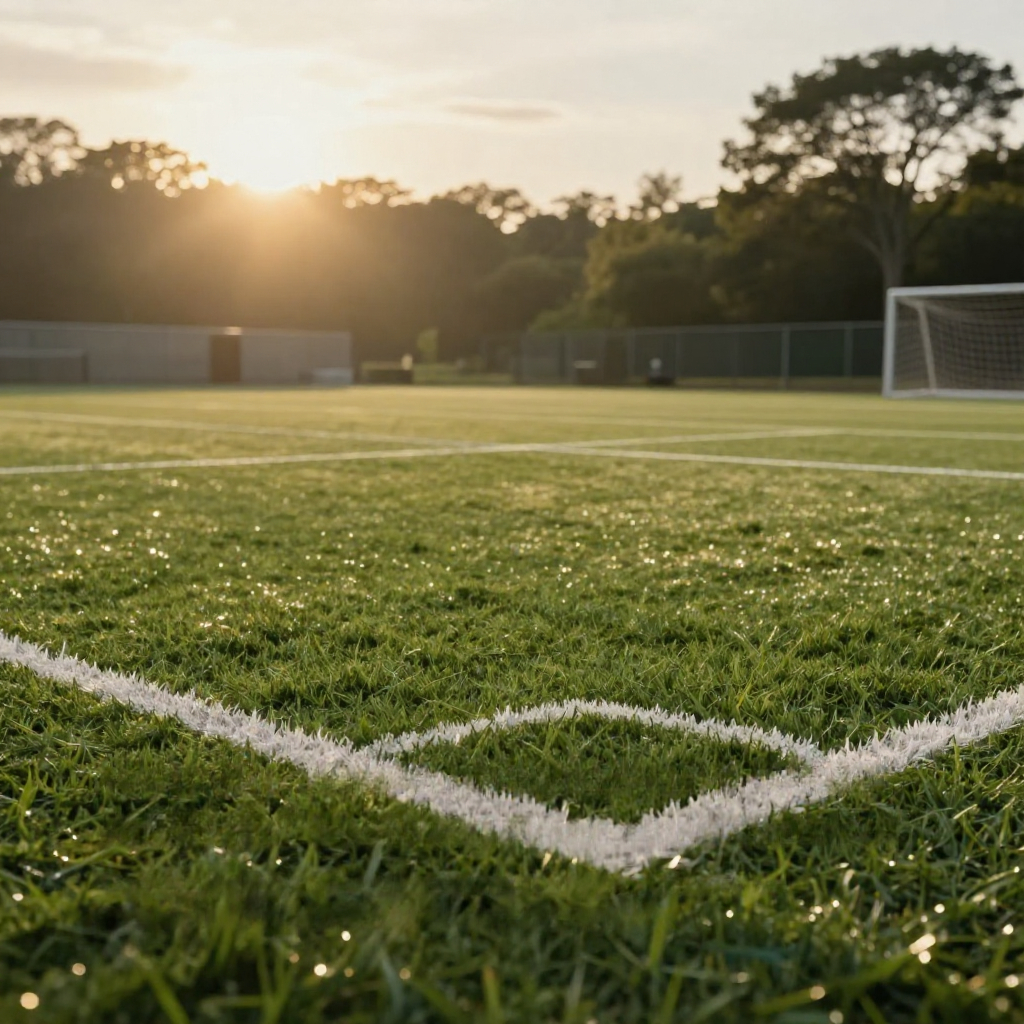
How Weather Affects Artificial Turf on Sports Courts
Weather plays a crucial role in determining how your sports court performs throughout the year. Understanding these environmental impacts helps facility managers and property owners make informed decisions about sports turf installation and maintenance in Randburg and Midrand.
Modern artificial turf systems face four primary weather challenges: rain drainage efficiency, UV degradation from intense sunlight, frost resistance during winter months, and maintaining year-round playability. Each factor significantly influences the performance and longevity of your sports surface.
Rain Drainage: Keeping Courts Playable After Storms
Effective drainage stands as the most critical factor for sports court functionality. Quality artificial turf systems drain water at impressive rates, often exceeding 10 gallons per square foot per minute. This rapid drainage ensures courts remain playable immediately after Gauteng’s sudden thunderstorms.
Poor drainage creates several problems. Water pooling leads to slippery surfaces that increase injury risk. Standing water also promotes bacterial growth and accelerates base layer deterioration. Over time, moisture issues cause structural damage that reduces your investment’s lifespan.
Professional artificial grass installation includes engineered drainage systems. These systems feature perforated backing materials that allow water to pass through efficiently. The base preparation incorporates crushed stone layers compacted to create optimal drainage slopes, typically around 1% gradient.
Modern synthetic turf features precision-punched drainage holes throughout the backing. These perforations prevent water accumulation while maintaining surface stability. Advanced backing materials resist water damage and prevent shrinkage or expansion during wet conditions.
Facility managers should inspect drainage systems regularly. Remove debris from drainage points to maintain optimal water flow. Clear vegetation around court edges prevents organic matter from blocking drainage channels. This simple maintenance ensures consistent performance regardless of weather conditions.
UV Degradation Protection: Combating South Africa’s Intense Sunlight
Gauteng’s abundant sunshine presents unique challenges for artificial turf. Prolonged UV exposure causes synthetic fibers to fade, become brittle, and eventually degrade. Surface temperatures can exceed 140°F during summer afternoons, accelerating this deterioration process.
Quality manufacturers incorporate UV stabilizers directly into synthetic fibers during production. These additives prevent color fading and maintain structural integrity despite constant sun exposure. The investment in UV-protected turf pays dividends through extended lifespan and maintained appearance.
Without proper UV protection, turf degrades rapidly. Fibers split and break down, creating uneven playing surfaces. Color loss affects visibility of field markings, impacting gameplay quality. Surface temperatures rise even higher as degraded fibers lose their reflective properties.
Tennis court artificial turf requires particularly robust UV protection. Players spend hours on court, making surface consistency crucial for performance and safety. UV-stabilized fibers maintain their spring and resilience, providing reliable ball bounce throughout the turf’s lifespan.
Consider heat-reducing infill options for courts receiving direct afternoon sun. Specialized infill materials help lower surface temperatures by 30-40°F compared to standard options. This cooling effect enhances player comfort while protecting the turf fibers from excessive heat stress.
Frost Resistance: Managing Winter Performance
While Johannesburg experiences mild winters, occasional frost still impacts artificial turf performance. Ice formation creates slick surfaces that compromise player safety. Melting snow combined with poor drainage produces muddy patches that damage the turf’s base structure.
Quality synthetic turf systems handle frost better than natural grass alternatives. The permeable backing allows ground moisture to dissipate rather than freezing into solid ice sheets. Proper installation with adequate drainage prevents water accumulation that could freeze beneath the surface.
Remove accumulated ice using plastic shovels rather than metal tools. Metal implements can tear synthetic fibers and damage the backing material. Never use salt or chemical de-icers on artificial turf, as these substances deteriorate synthetic materials and harm infill properties.
Specialized infill materials reduce ice formation on playing surfaces. Certain infill types maintain better temperature regulation, minimizing frost accumulation during cold nights. This technology ensures safer playing conditions throughout winter months.
Plan maintenance schedules around seasonal weather patterns. Brush turf fibers upright after frost events to restore optimal playing characteristics. Check infill levels more frequently during winter, as freeze-thaw cycles can cause settling that requires replenishment.
Year-Round Playability: Maximizing Field Availability
The primary advantage of artificial turf lies in its consistent year-round performance. Unlike natural grass that requires recovery periods, synthetic surfaces maintain playability through all weather conditions. This reliability maximizes facility usage and return on investment.
Soccer field artificial grass eliminates weather-related cancellations. Teams practice and compete on schedule regardless of recent rainfall or drought conditions. This consistency proves invaluable for schools, sports clubs, and municipal facilities serving multiple user groups.
Proper maintenance enhances all-weather performance. Regular brushing prevents fiber matting that reduces drainage efficiency. Periodic infill top-ups maintain shock absorption and surface stability. Professional inspections identify potential issues before they impact playability.
Temperature extremes challenge all outdoor surfaces. Artificial turf handles these variations better than alternatives when properly installed. The engineered base provides consistent support regardless of ground moisture levels. Synthetic fibers resist the compaction and wear patterns that plague natural grass during heavy use.
Commercial facilities benefit significantly from year-round reliability. Padel court construction with artificial turf ensures consistent court availability. Players enjoy predictable surface characteristics that enhance gameplay quality regardless of season.
Selecting Weather-Resistant Artificial Turf Systems
Choosing appropriate turf specifications ensures optimal weather performance. Fiber composition significantly impacts durability and weather resistance. Polyethylene provides excellent UV stability and maintains softness despite temperature variations. Polypropylene offers superior strength for high-traffic applications.
Backing material quality determines drainage efficiency and dimensional stability. Double-layer backing systems provide superior moisture resistance and prevent turf shrinkage. Latex or polyurethane coatings enhance durability while maintaining flexibility across temperature ranges.
Infill selection affects both performance and weather resistance. Silica sand provides excellent stability and drainage properties. Rubber infill enhances shock absorption and maintains performance during temperature extremes. Some facilities use combination infill systems to optimize multiple performance characteristics.
Installation quality matters as much as material selection. Professional artificial grass installation in Randburg ensures proper base preparation, precise grading, and effective drainage systems. Experienced installers understand local climate challenges and design systems accordingly.
Consider warranty coverage that addresses weather-related performance. Quality manufacturers back their products with warranties covering UV stability, drainage performance, and fiber durability. These guarantees demonstrate confidence in weather resistance and protect your investment.
Maintenance Practices for Weather Resilience
Proactive maintenance maximizes artificial turf performance across all weather conditions. Implement regular cleaning schedules that remove debris before it impacts drainage. Use leaf blowers or gentle rakes to clear leaves and organic matter that could block water flow.
Artificial grass maintenance includes periodic deep cleaning to remove accumulated dust and contaminants. Hose down the entire surface monthly to maintain fresh appearance and optimal drainage. This simple practice prevents buildup that could compromise performance during heavy rainfall.
Brush turf fibers regularly to maintain upright orientation. This grooming prevents matting that reduces drainage efficiency and impacts playing characteristics. Use specialized turf brushes or brooms that won’t damage synthetic fibers. Schedule brushing after heavy use periods or weather events.
Monitor infill levels throughout the year. Weather conditions cause gradual infill migration that requires periodic replenishment. Maintain manufacturer-recommended infill depths to ensure optimal shock absorption and surface stability. Address low infill areas promptly to prevent uneven playing conditions.
Professional inspections catch weather-related issues early. Annual assessments evaluate drainage performance, UV degradation, and overall system integrity. Professionals identify developing problems before they require expensive repairs or premature replacement.
Long-Term Performance and Investment Protection
Weather-resistant artificial turf represents a significant but worthwhile investment. Properly installed systems last 8-12 years under normal use conditions. This longevity depends heavily on weather resistance and consistent maintenance practices.
Compare lifecycle costs when evaluating turf options. Initial investment in UV-stabilized, high-drainage systems pays returns through extended lifespan and reduced maintenance requirements. Factor in the cost of weather-related repairs when considering budget alternatives.
Document maintenance activities to support warranty claims. Keep records of cleaning schedules, infill top-ups, and professional inspections. This documentation proves proper care and helps identify patterns that might indicate developing issues.
Environmental conditions vary across Gauteng. Facilities in areas with intense sun exposure prioritize UV protection. Properties with heavy seasonal rainfall focus on drainage capacity. Work with experienced suppliers who understand local climate challenges and recommend appropriate specifications.
Plan replacement cycles based on actual performance rather than arbitrary timelines. Monitor key indicators like fiber condition, drainage efficiency, and infill stability. Replace turf when performance degradation affects safety or playability rather than waiting for complete failure.
Making Informed Decisions for Your Facility
Understanding weather impacts helps you select and maintain artificial turf systems effectively. Consider your facility’s specific climate challenges when choosing specifications. Evaluate UV exposure, rainfall patterns, and temperature extremes typical for your location.
Partner with experienced suppliers who offer comprehensive services from design through installation and maintenance. Quality providers assess site conditions, recommend appropriate systems, and provide ongoing support ensuring optimal performance.
Weather-resistant artificial turf delivers reliable performance that natural grass cannot match. Investment in quality materials and professional installation provides years of consistent playability. This reliability serves athletes, facility managers, and communities throughout Gauteng.
Contact LawnKing Gardens in Randburg today for expert consultation on weather-resistant sports turf solutions. Our team understands local climate challenges and designs systems that perform excellently year-round. Transform your sports facility with artificial turf engineered for South African conditions.
Related Resources:
LawnKing Gardens specializes in premium artificial grass installation throughout Randburg, Midrand, and surrounding Gauteng areas. Our experienced team delivers weather-resistant sports surfaces that maximize performance and longevity.
Recent Posts:
- Is Artificial Sports Turf Safe? Understanding Impact Absorption and Injury Prevention
- What’s the Return on Investment for Sports Facilities Installing Artificial Turf?
- How Does Artificial Putting Grass Compare to Natural Greens for Ball Roll and Speed?
- What Maintenance Does Artificial Sports Turf Require for Optimal Performance?