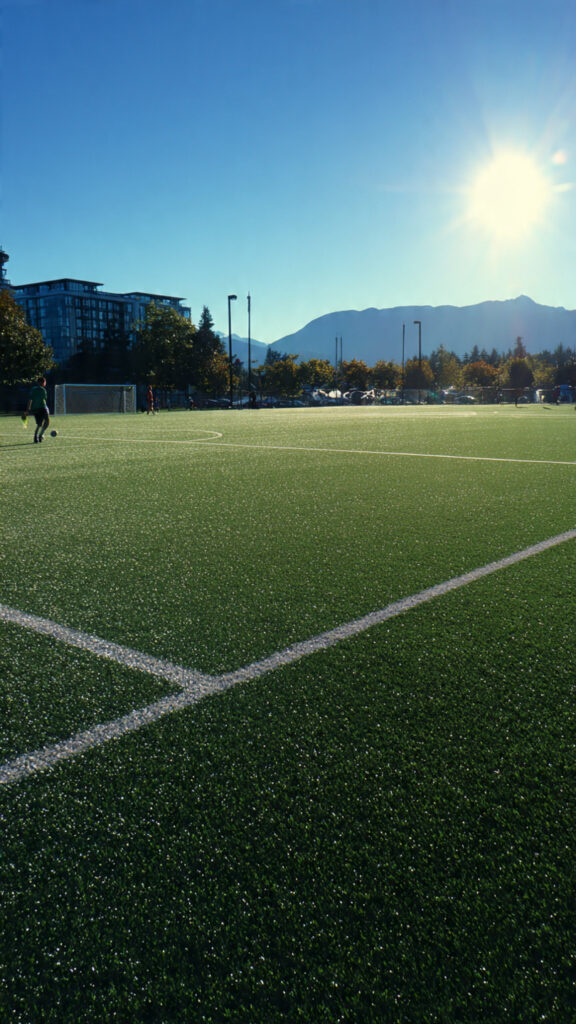
Can Natural Grass Sports Courts Be Converted to Artificial Turf?
Sports facilities across Randburg and Midrand face a growing operational challenge. Maintaining natural grass courts demands constant attention and significant resources. At the same time, unpredictable weather frequently disrupts training schedules and match fixtures. As a result, many facilities struggle with uneven playing surfaces and escalating maintenance costs. For this reason, an increasing number of sports administrators are now exploring the conversion of natural grass sports courts to artificial turf as a long-term strategic solution.
Fortunately, converting existing natural grass sports courts to artificial turf is entirely achievable. Moreover, this transformation delivers substantial benefits for schools, clubs, and community facilities throughout Gauteng. This guide outlines the conversion feasibility, assessment process, removal procedures, realistic timelines, and practical strategies for minimizing downtime during the transition.
Understanding the Conversion Feasibility
The good news is clear. Almost all natural grass sports courts can be successfully converted to high-quality artificial turf. However, each facility presents unique site conditions that influence how the conversion is approached.
Across Johannesburg’s northern suburbs, facilities encounter recurring environmental pressures. Heavy rainfall leads to waterlogged fields. Meanwhile, extreme summer heat weakens grass coverage. During winter, frost damage further compromises playing surfaces. Consequently, valuable training time is lost throughout the year. By comparison, artificial sports turf removes these weather-related disruptions entirely.
Additionally, the conversion process supports a wide range of sporting codes. Soccer fields become year-round training venues. Rugby pitches gain predictable performance characteristics. Tennis courts achieve professional-grade playability. Hockey surfaces deliver consistent ball speed and control. Furthermore, multi-purpose sports facilities can accommodate several sports on a single surface without sacrificing quality.
The Professional Assessment Process
Before any conversion begins, a detailed site assessment is essential. Professional installers conduct comprehensive evaluations to identify factors that will influence design, construction, and long-term performance.
Initial Site Inspection
First, experienced installation teams visit the facility to assess existing conditions. Field dimensions are measured accurately. Drainage systems are documented. Soil composition and compaction levels are tested. In addition, underground utilities and irrigation infrastructure are carefully identified.
In many cases, the inspection determines whether existing drainage systems can be reused. Retaining suitable infrastructure can significantly reduce conversion costs. However, if drainage is inadequate, full replacement becomes necessary to guarantee durability and performance.
Structural Analysis
Next, assessment teams evaluate the structural stability of the sports court foundation. Soil strength and compaction rates are tested. Surface gradients are measured to ensure effective water runoff. At the same time, any signs of erosion or settlement are identified and addressed.
This analysis determines the required excavation depth. Typically, 300–450 mm of existing material is removed. Nevertheless, site-specific conditions may necessitate deeper excavation depending on base layer requirements.
Performance Requirements
Equally important, professional assessments account for how the facility will be used. High-traffic training venues require different specifications than recreational fields. Contact sports demand enhanced shock absorption, while precision sports require exceptionally smooth surfaces.
During consultations, installers discuss long-term goals and budget considerations. Based on this, they recommend suitable artificial grass pile heights and infill systems that balance safety, durability, and performance.
Natural Grass Removal Procedures
Once planning is complete, removing the existing natural grass marks the first major construction phase. Professional teams follow structured procedures to prepare the site correctly.
Surface Vegetation Removal
Initially, all grass and organic material are stripped from the surface using specialized equipment. Typically, 75–125 mm of topsoil is removed, including roots and accumulated thatch. Importantly, complete removal is essential to prevent decomposition beneath the artificial turf.
Crews work systematically across the entire field. If organic material remains, soft spots and drainage issues may develop later. Therefore, thorough removal is critical for long-term success.
Debris Clearance
After vegetation removal, teams clear rocks, roots, and debris from the site. The surface is then graded to achieve the correct slope for drainage. In most cases, a 1% gradient is applied to direct water away from structures.
This step creates a clean, stable foundation for base installation. Moreover, it prevents complications during turf installation and improves drainage efficiency.
Existing Infrastructure Management
Existing irrigation systems, lighting poles, and field fixtures must also be addressed. While irrigation is no longer required for turf health, some facilities retain minimal systems for surface cooling during extreme heat. Nonetheless, artificial turf eliminates traditional watering needs entirely, resulting in major water savings.
Base Layer Construction and Preparation
A properly constructed base layer is fundamental to artificial turf performance, drainage, and lifespan.
Sub-Base Installation
To begin, installers lay a robust sub-base using crushed stone or aggregate. This layer, typically 200–300 mm thick, provides stability and excellent drainage. Materials are spread evenly and graded using laser-guided equipment.
Subsequently, heavy rollers compact the sub-base to achieve 90–95% density. As a result, the foundation becomes highly resistant to movement and settlement. Proper sub-base preparation ensures consistent playability across the entire field.
Drainage System Integration
Effective drainage is critical for rapid water dispersal. Perforated pipes are installed beneath the surface and connected to stormwater systems or designated outlets. Additionally, a granite dust layer of approximately 25 mm is applied to create a smooth, permeable surface for turf installation.
Shock Pad Installation
For many sports, shock pads are installed above the base layer. These underlays significantly improve player safety by reducing impact forces. Furthermore, they extend turf lifespan by minimizing fiber compression in high-traffic areas.
Artificial Turf Installation Process
With base preparation complete, the artificial turf installation phase begins.
Turf Roll-Out and Positioning
First, turf rolls are carefully positioned across the field to minimize seams. Installers ensure correct fiber orientation and allow the material to acclimate to ambient temperatures. This step prevents future buckling or separation.
Seaming and Edge Securing
Next, turf sections are bonded using professional-grade seam tape and adhesives. Edges are secured with galvanized fixings or adhesive systems. As a result, the surface remains stable even under intensive use.
Infill Application and Distribution
Infill materials are then applied using broadcast spreaders to ensure uniform coverage. Proper infill depth supports fiber resilience, enhances shock absorption, and improves traction. Finally, installers verify infill levels before approval.
Realistic Timeline Expectations
Understanding timelines helps facilities plan effectively.
-
Planning phase: 2–4 weeks
-
Construction phase: 6–12 weeks
-
Settling period: 1–2 weeks
While weather can affect excavation schedules, artificial turf installation continues in most conditions once the base is complete. Therefore, professional installers factor contingencies into project planning.
Strategies for Minimizing Facility Downtime
To reduce disruption, many facilities schedule projects during off-season periods. Alternatively, larger venues adopt phased conversions, maintaining partial usability throughout construction. Temporary partnerships with nearby facilities also help preserve training continuity.
Long-Term Benefits After Conversion
After conversion, facilities experience dramatic improvements.
-
Usage capacity increases from 1,000 to over 3,000 hours annually
-
Maintenance costs drop due to reduced labor and water use
-
Surface consistency improves, enhancing athlete safety and performance
In addition, artificial turf supports water conservation and eliminates chemical treatments, making it an environmentally responsible choice.
Ready to Transform Your Sports Facility?
LawnKing Gardens specializes in professional sports turf conversions across Randburg, Midrand, and Gauteng. Their experienced teams manage every stage, from assessment to installation.
📞 Call 068 474 7303 today to schedule your free consultation and discover how artificial turf can elevate your sports facility.
Recent Posts:
- What Subbase Preparation Is Required Before Installing Sports Turf in Gauteng?
- How Do Weather Conditions Affect Artificial Turf Performance on Sports Courts?
- Is Artificial Sports Turf Safe? Understanding Impact Absorption and Injury Prevention