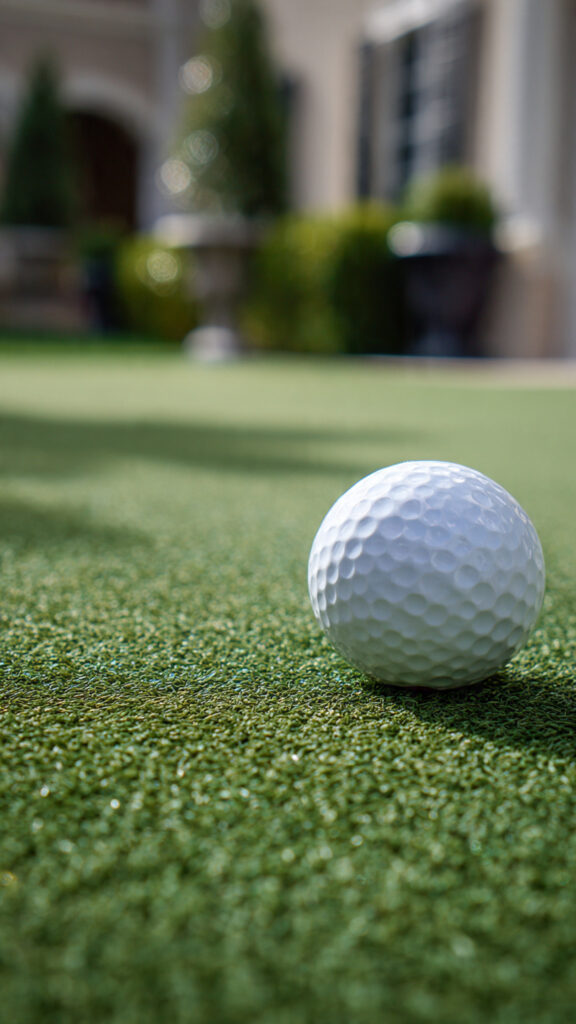
Artificial Putting Grass vs Natural Greens: Ball Roll & Speed
Golf enthusiasts in Randburg and Midrand increasingly face a critical decision when creating practice facilities. Should they invest in artificial putting grass or maintain traditional natural greens? This comprehensive guide explores how synthetic putting surfaces compare to natural grass in terms of ball roll consistency, speed measurements, and customization options.
Understanding Stimpmeter Readings: The Industry Standard
The Stimpmeter serves as golf’s universal measurement tool for green speed. This device measures how far a ball rolls across a putting surface under standardized conditions. Professional golf course superintendents and backyard putting green owners alike rely on this tool to ensure consistent playing conditions.
The measurement process involves releasing a golf ball from a precisely angled aluminum bar. When the ball rolls across the green, the distance it travels in feet becomes the Stimpmeter reading. Higher numbers indicate faster surfaces, while lower numbers suggest slower playing conditions.
Most recreational golfers encounter greens measuring between 8 and 10 feet on the Stimpmeter. Meanwhile, professional tournament venues typically maintain speeds of 11 feet or higher. Championship courses like Augusta National push speeds to 12-14 feet, creating lightning-fast conditions that challenge even elite players.
Artificial Putting Grass Performance Characteristics
Modern artificial grass technology has revolutionized home putting green installations. These synthetic surfaces deliver remarkable consistency that natural grass struggles to match. Manufacturers engineer artificial putting grass to provide predictable ball roll regardless of weather conditions, foot traffic, or time of year.
Premium artificial putting grass typically achieves Stimpmeter readings between 9 and 12 feet. This range accommodates various skill levels and practice needs. Advanced golfers can customize their surfaces to match tournament-speed conditions, while recreational players enjoy more forgiving speeds that encourage skill development.
The fiber construction plays a crucial role in performance. Nylon-based putting greens offer superior durability and resistance to UV damage. These materials maintain their playability through thousands of practice sessions. The short pile height, typically between 0.375 and 0.5 inches, creates the smooth surface necessary for consistent ball roll.
Consistency Benefits of Synthetic Surfaces
Consistency represents artificial putting grass’s greatest advantage. Natural greens face constant challenges from weather, growth patterns, and maintenance schedules. Artificial surfaces eliminate these variables entirely.
Every putt on synthetic turf behaves predictably. The ball follows the same line at the same speed day after day. This consistency proves invaluable for developing muscle memory and perfecting your putting stroke. You won’t encounter surprise slow patches or areas where the grass grain affects your ball’s trajectory.
Moreover, artificial putting grass performs identically in morning dew, afternoon heat, or evening coolness. Natural grass requires hours to dry after rain, but synthetic surfaces drain efficiently and become playable almost immediately. This reliability ensures you can practice whenever you want, without checking weather conditions or waiting for optimal playing times.
Natural Grass Green Characteristics
Traditional putting greens, typically featuring bent grass or Bermuda varieties, offer their own distinct advantages. Many serious golfers prefer natural surfaces because they replicate actual course conditions. The subtle variations in grass growth, grain direction, and surface firmness create authentic challenges.
Natural greens achieve Stimpmeter readings similar to artificial surfaces when properly maintained. However, maintaining these speeds requires extensive daily care. Course superintendents must mow 4 to 6 times weekly, fertilize regularly, and monitor growing conditions constantly.
Environmental factors significantly impact natural green performance. Moisture levels, temperature fluctuations, and sunlight exposure all affect speed and consistency. A green that rolls perfectly in the morning may play differently by afternoon as conditions change. This variability can actually benefit practice by forcing players to adapt their touch and feel.
Maintenance Requirements and Challenges
Natural grass putting greens demand considerable investment in both time and resources. Professional-grade reel mowers, specialized fertilizers, and irrigation systems become necessary equipment. You’ll need to edge, aerate, and treat for pests and diseases regularly.
The grass itself requires specific growing conditions. Full sunlight, proper air circulation, and excellent drainage all contribute to healthy turf. Trees, buildings, or low-lying areas can compromise these conditions, making natural green installation more complex than artificial alternatives.
Furthermore, natural greens need recovery periods after heavy use. Excessive foot traffic compacts soil and damages grass blades. Divots from practice sessions require repair and reseeding. Without proper management, these surfaces develop uneven spots that affect ball roll consistency.
Ball Roll Comparison: Synthetic vs Natural
Understanding how golf balls behave on different surfaces helps golfers make informed decisions. Both artificial putting grass and natural greens can deliver excellent ball roll when properly installed and maintained. However, they achieve this performance through different mechanisms.
Artificial surfaces rely on engineered consistency. The uniform fiber density and specialized infill materials create a predictable playing field. Premium artificial grass products feature advanced fiber technology that mimics natural grass behavior while eliminating variables that cause inconsistency.
Natural grass achieves its roll characteristics through biological processes. Proper mowing height, grass density, and moisture content all contribute to ball roll quality. When these factors align perfectly, natural greens can provide unmatched feel and authenticity. However, maintaining this alignment requires constant attention and expertise.
Speed Consistency Throughout the Day
Temperature and moisture dramatically affect natural green speeds. Morning dew slows ball roll significantly. As surfaces dry, speeds increase gradually throughout the day. Evening irrigation resets this cycle. These fluctuations challenge golfers to constantly adjust their putting stroke.
Artificial putting grass eliminates these daily variations. The surface maintains consistent speed from sunrise to sunset. This stability allows focused practice on technique rather than constantly adapting to changing conditions. Additionally, the performance remains steady across seasons, providing year-round practice opportunities.
Research shows that artificial surfaces typically maintain speeds within 0.5 feet on the Stimpmeter throughout the day. Natural greens, conversely, can vary by 2-3 feet depending on environmental conditions and maintenance timing. This difference significantly impacts practice quality and skill transfer to actual course play.
Customization Options for Different Skill Levels
Modern artificial putting grass installations offer remarkable customization possibilities. Golfers can tailor their practice surfaces to match their specific needs and skill development goals. This flexibility makes synthetic greens increasingly popular for home installations.
Beginners benefit from slower speeds around 8-9 feet on the Stimpmeter. These forgiving surfaces build confidence and allow focus on stroke mechanics without constant three-putts. As skills improve, homeowners can adjust infill depth or install faster turf options to increase difficulty.
Advanced players often choose surfaces that replicate tournament conditions. Speed ratings of 11-12 feet challenge touch and distance control. Some installations even feature multiple speed zones, allowing practice on various conditions within a single putting green.
Contour and Break Customization
Beyond speed, artificial putting greens offer unlimited design possibilities. Professional installers can create undulations, slopes, and breaks that mimic challenging course conditions. Some systems incorporate multiple hole locations, allowing practice on different putt angles and distances.
Natural greens face limitations based on site topography and drainage requirements. Artificial installations overcome these constraints through engineered base construction. Installers can create features that would be impossible or impractical with natural grass, including severe slopes and complex breaks.
LawnKing Gardens specializes in custom artificial turf installations that incorporate these advanced features. Their expertise ensures proper drainage, stable foundations, and professional-grade surfaces that enhance practice effectiveness.
Durability and Weather Resistance
Weather resistance represents another critical consideration for Randburg and Midrand property owners. South African climate conditions challenge both artificial and natural surfaces, though in different ways.
Artificial putting grass withstands extreme weather conditions remarkably well. UV-stabilized fibers resist sun damage and color fading despite intense summer heat. Heavy rainfall drains efficiently through permeable backing systems. Winter frost has minimal impact on synthetic materials, allowing year-round playability.
Natural grass faces significant weather-related challenges. Drought conditions stress turf and slow growth. Excessive rainfall creates muddy conditions and disease risks. Temperature extremes affect grass health and recovery rates. These factors make consistent maintenance particularly challenging during seasonal transitions.
Long-term Performance and Investment
Premium artificial putting grass installations typically last 15-20 years with minimal maintenance. The initial investment costs more than natural grass installation. However, eliminating ongoing maintenance expenses often makes artificial surfaces more economical long-term.
Calculate the costs of weekly mowing, regular fertilization, irrigation, and equipment maintenance for natural greens. Add the value of time spent on these tasks. Most homeowners find that artificial surfaces pay for themselves within 5-7 years through maintenance savings alone.
Furthermore, artificial surfaces maintain their performance characteristics throughout their lifespan. Natural greens require periodic renovation, overseeding, and sometimes complete replanting to restore optimal playing conditions. These interventions add substantial costs over time.
Professional Installation Considerations
Successful artificial putting green installation requires specialized expertise and equipment. The foundation determines long-term performance, making professional installation essential for achieving desired results.
Proper base preparation creates a stable, draining foundation. Multiple layers of crushed stone and compacted materials prevent settling and maintain surface uniformity. Professional installers understand local soil conditions and climate factors that affect installation specifications.
Seaming technology has advanced significantly in recent years. Expert installers create invisible joins that prevent ball deflection and maintain consistent roll across the entire surface. Poor installation techniques result in visible seams that compromise both appearance and playability.
LawnKing Gardens brings extensive experience to putting green installations throughout Randburg and Midrand. Their team understands the technical requirements for creating professional-grade practice facilities that deliver lasting performance.
Maintenance Requirements: A Practical Comparison
Maintenance differences between artificial and natural putting surfaces dramatically impact ownership experience. Understanding these requirements helps property owners make informed decisions based on available time and resources.
Artificial grass maintenance requires minimal effort. Weekly removal of leaves and debris keeps surfaces clean. Monthly rinsing removes dust and maintains appearance. Occasional brushing redistributes infill material and keeps fibers upright. These simple tasks typically consume less than 30 minutes monthly.
Natural grass maintenance demands substantial time commitment. Daily mowing during growing seasons, precise irrigation scheduling, and regular fertilization all require attention. Add pest monitoring, disease management, and seasonal treatments. Many homeowners spend 10-15 hours monthly maintaining natural putting greens.
Equipment and Expertise Requirements
Natural green maintenance necessitates specialized equipment. Professional reel mowers cost thousands of dollars. Fertilizer spreaders, aerators, and dethatchers add to equipment investments. Storage space and regular maintenance of this equipment create additional considerations.
Artificial surfaces eliminate these equipment needs entirely. A leaf blower and garden hose handle most maintenance tasks. No specialized training or expertise becomes necessary. Property owners can manage maintenance themselves without hiring professional services.
Additionally, artificial putting grass removes concerns about proper mowing height, grass varieties, or disease identification. These technical aspects of natural grass care often require professional consultation or extensive personal knowledge development.
Making the Right Choice for Your Property
Selecting between artificial putting grass and natural greens depends on multiple factors specific to your situation. Consider your practice goals, available maintenance time, budget constraints, and property characteristics.
Serious golfers who value authentic course replication may prefer natural grass despite higher maintenance requirements. Those prioritizing convenience, consistency, and year-round playability typically choose artificial solutions. Both options can deliver excellent practice opportunities when properly implemented.
Location characteristics also influence decisions. Properties with limited sunlight, poor drainage, or space constraints often favor artificial installations. Conversely, properties with ideal growing conditions and available maintenance resources can support beautiful natural greens.
Budget considerations extend beyond initial installation costs. Calculate long-term maintenance expenses, time commitments, and equipment investments when comparing options. Many property owners discover that artificial surfaces deliver better long-term value despite higher upfront costs.
Expert Installation Services from LawnKing Gardens
LawnKing Gardens provides comprehensive artificial grass solutions for golf enthusiasts throughout Randburg and Midrand. Their experienced team delivers professional installations that combine performance, durability, and aesthetic appeal.
From initial consultation through final installation, LawnKing Gardens guides clients through every decision. They assess property characteristics, discuss performance goals, and recommend appropriate products and designs. Their commitment to quality ensures putting greens that exceed expectations.
The company offers various artificial grass options suitable for putting applications. Each product features specific characteristics designed for different performance requirements and budget considerations. Professional installation includes proper base preparation, precise seaming, and optimized drainage systems.
Beyond putting greens, LawnKing Gardens provides complete landscaping solutions including irrigation systems, paving, and instant lawn services. This comprehensive expertise allows seamless integration of putting greens into overall property design.
Conclusion: Choosing Your Perfect Practice Surface
Both artificial putting grass and natural greens offer distinct advantages for home golf practice. Modern synthetic surfaces deliver unmatched consistency, minimal maintenance, and customizable performance. Natural grass provides authentic playing experiences that perfectly replicate course conditions.
For most homeowners in Randburg and Midrand, artificial putting grass represents the optimal choice. The combination of consistent ball roll, minimal upkeep, and weather resistance creates ideal practice conditions year-round. Customization options accommodate all skill levels from beginner to advanced.
Contact LawnKing Gardens today to discuss your putting green project. Their expertise transforms backyards into professional-grade practice facilities that enhance your golf game while adding lasting value to your property. Whether you choose artificial or natural surfaces, professional installation ensures optimal performance and enjoyment for years to come.
Visit LawnKing Gardens to explore your options and schedule a consultation. Your perfect practice green awaits.
Recent Posts: